


US imposes 50% tariffs on Canadian goods as talks collapse, sparking historic trade showdown
US imposes 50% tariffs on Canadian goods as talks collapse, sparking historic trade showdown

Maria Villarroel Sat, August 22, 2026 at 5:04 AM UTC
0
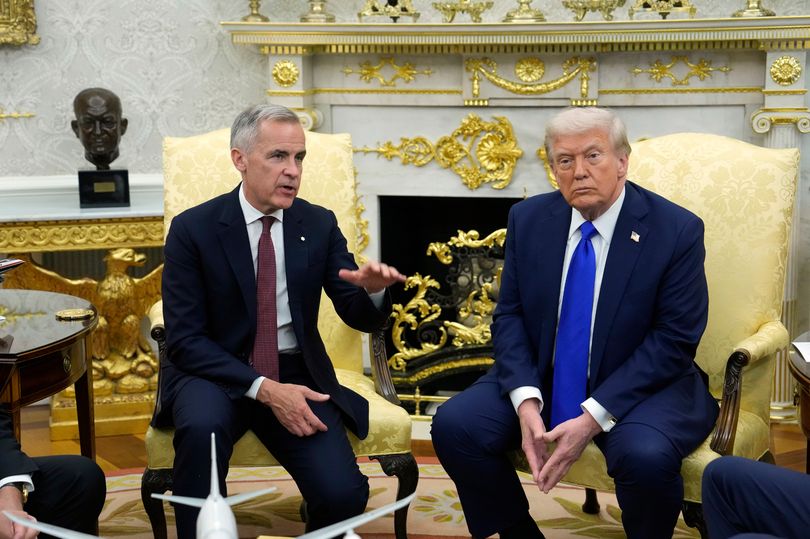
Carney announced Friday night that while progress had been made during the weeks-long discussions, "progress has not been enough to meet our objectives for Canadians” -Credit:Adrian Wyld/The Canadian Press v
Canada suspended trade negotiations with the United States, Prime Minister Mark Carney announced Friday. The move will set in motion steep 50% tariffs on Canadian goods.
Carney announced Friday night that while progress had been made during the weeks-long discussions, "progress has not been enough to meet our objectives for Canadians.” “As a result, this evening, I have decided to suspend trade negotiations with the U.S. and have directed Canada’s negotiators to return to Ottawa,” Carney said in an email.
"At midnight tonight, the US intends to impose a 50% tariff on roughly $28 billion of Canadian goods. Canada will match those tariffs dollar for dollar to protect our workers and businesses," the email added. Neither the president, nor the White House immediately comment on the trade negotiations.
• The true cost of tariffs on Michigan paints bleak picture after Trump hails 'booming industry'
• Donald Trump set to unleash new 'sweeping' tariffs on 60 countries within hours
The tariffs are expected to impact about $20 billion worth of Canadian goods being imported into the U.S., including hockey sticks, some building material, liquors, and some clothing.
According to a U.S. official, trade negotiations failed because the Canada wanted the U.S. to give concessions it was not ready for, including when it came to the automotive sector, steel, aluminum, and lumber.
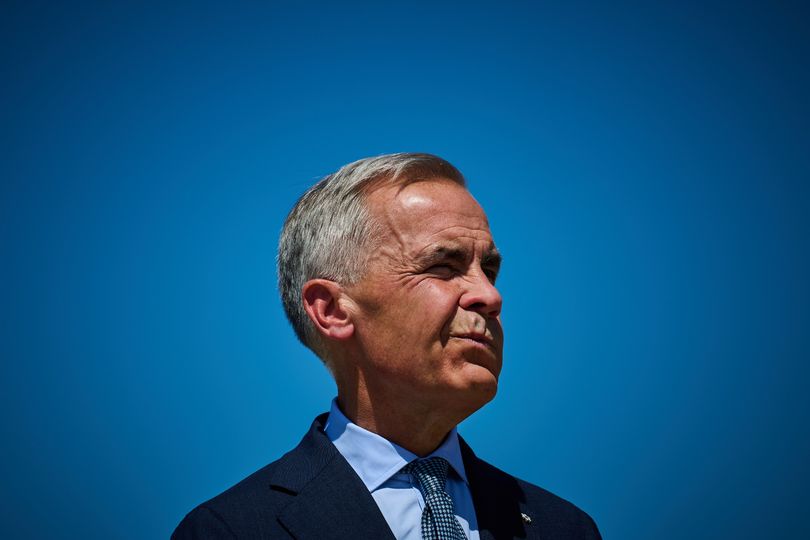
The tariffs are expected to impact about $20 billion worth of Canadian goods being imported into the U.S. -Credit:Sammy Kogan/The Canadian Press v
"Tonight, Canada declined to finalize the trade deal under the terms agreed earlier this week. Despite the U.S. offer to Canada to receive the best treatment of any major exporter to our market, new demands and walk-backs of other commitments by Canada have upended the careful balance reached in the past days," U.S. Trade Representative Jamieson Greer said in a statement to reporters on a press call shortly after midnight.
He added tat the U.S. offer was "forward-looking" and included a "historic economic and national security partnership."
But despite those claims, Carney blamed Washington for the breakdown, saying "last-minute changes in the U.S. proposed terms were unfair, uneconomic, and called into question the reliability of any deal."
No further talks have been planned. The breakdown in negotiations marked a sharp reversal from two days earlier, when officials from the two countries sounded as if they were headed toward a compromise.
The Canadian prime minister also said his country's goal throughout the negotiations had been to secure the best possible agreement, "never a deal at any price or on any deadline."
Advertisement
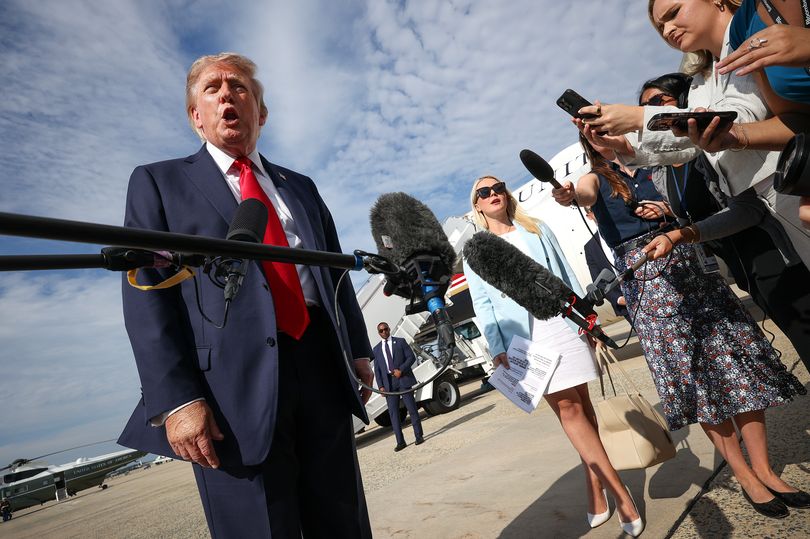
The Canadian prime minister also said his country's goal throughout the negotiations had been to secure the best possible agreement, "never a deal at any price or on any deadline" -Credit:Getty ImagesA historically-cooperative alliance falls through
The political impact will likely be even bigger than the economic fallout. The countries sold each other $880 billion worth of goods and services last year.
The tariffs were initially supposed to kick in at 12:01 a.m. Wednesday. But Trump extended the deadline for three days to allow talks to continue, but the two countries still could not reach an agreement in time.
The two countries have wrangled for decades over trade, poking each other over sore spots like Canadian softwood lumber imports and U.S. access to Canada’s protected dairy market.
Somehow, they still managed to remain friends, allies and trading partners. Canadian soldiers fought alongside Americans in Afghanistan after 9/11. The 5,525-mile U.S.-Canada border is undefended, and nearly 330,000 people and $2 billion worth of goods cross it every day; 800,000 Canadians live in the United States.
Trump’s approach to dealing with Canada marks an extraordinary departure from the traditionally cooperative relationship between the two countries. Trump has hit Canadian goods with tariffs — in a push to bring manufacturing back to the United States — and has repeatedly made inflammatory comments about turning Canada into America’s 51st state.
Carney said Canada had recognized that “America has changed” and that the two countries would “not return to our old relationship.”
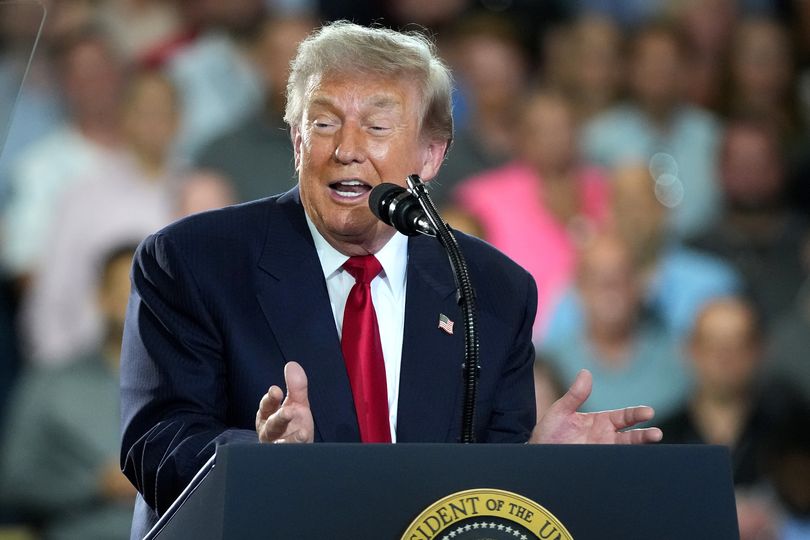
Carney said Canada had recognized that “America has changed” and that the two countries would “not return to our old relationship.” -Credit:Getty ImagesCanadians and Americans grow frustrated
The Canadian public is fed up. A petition to expel the U.S. ambassador, a Trump ally, has collected nearly 248,000 signatures since July 21. It accuses Ambassador Pete Hoekstra of having “normalized’’ Trump’s talk of annexing Canada, among other things.
The two countries had good reasons to find a compromise.
Nearly 72% of Canada’s goods exports last year went to the United States. And the Trump administration might be wary of imposing a hefty new tariff — paid by U.S. importers who try to pass along the cost to consumers via higher prices — ahead of November’s midterm elections. American voters are already frustrated with the high cost of living.
“Canada likely wanted further sector-specific relief than the U.S. was willing to offer, or Canada’s concessions did not go far enough,’' said Ryan Majerus, a partner at King & Spalding and a former U.S. trade official. “Either way, I think both sides will be under immense pressure in the coming days to still find an off-ramp. But if Canada has agreed to also impose tariffs, the off-ramp may be even harder to find.”
Candace Laing, president and CEO of the Canadian Chamber of Commerce, called the tariffs “a body blow to North American competitiveness,” warning they would raise costs for Americans while threatening Canadian customers, investment and small businesses.
The rift comes as the United States, Mexico and Canada are trying to renew a trade agreement that Trump negotiated in his first term and once praised as a triumph. The United States has begun formal talks with Mexico over revamping the US-Mexico-Canada Agreement (USMCA). But talks with Canada have not begun, and escalating trade conflict casts doubt on whether they will.
“Canada told the Americans in advance that if these tariffs landed, it would stop negotiating and retaliate,’' said Barry Appleton, senior fellow at the Center for International Law at New York Law School. ”The American trade representative said publicly he would not tolerate retaliation. Both sides have now committed themselves in public, which is how escalation stops being a choice.’'
Source: “AOL Money”
