


Sunrun Surges 26% on 16-Gigawatt Virtual Power Plant Deal With Tesla and Renew Home
Sunrun Surges 26% on 16-Gigawatt Virtual Power Plant Deal With Tesla and Renew Home
David MoadelWed, June 24, 2026 at 3:47 PM UTC
0
Petmal / iStock via Getty ImagesQuick Read -
Sunrun (RUN) jumped 26% on a 16 GW virtual power plant deal with Tesla (TSLA) and Renew Home targeting AI data center load.
Goldman Sachs projects U.S. data center power demand to hit 66 GW by 2027, the surging load curve driving this entire partnership.
The deal is a capacity framework, not signed hyperscaler contracts, and Sunrun stock remains down 11% year-to-date despite today's rally.
Act now: the analyst who called NVIDIA in 2010 just named his top 10 AI stocks — and Tesla didn't make the cut. Grab the names FREE today.
Sunrun (NASDAQ:RUN) stock is up 26% to $16.17 in midday trading Wednesday after the residential solar leader unveiled a sweeping virtual power plant (VPP) partnership with Tesla (NASDAQ:TSLA) and Renew Home. The intraday move tracks toward one of Sunrun's biggest single-session gains in months.
The deal aims to deliver more than 16 gigawatts (GW) of flexible energy capacity to hyperscalers and utilities. That's a direct play on the surge in electricity demand from data centers and artificial intelligence workloads.
Tesla is the named partner here, not a big stock mover on the news. The partnership is highly impactful to small-cap Sunrun but largely immaterial to Tesla shares at the company's roughly $1.44 trillion market value.
A 16-Gigawatt Distributed Power Plant Aimed at AI
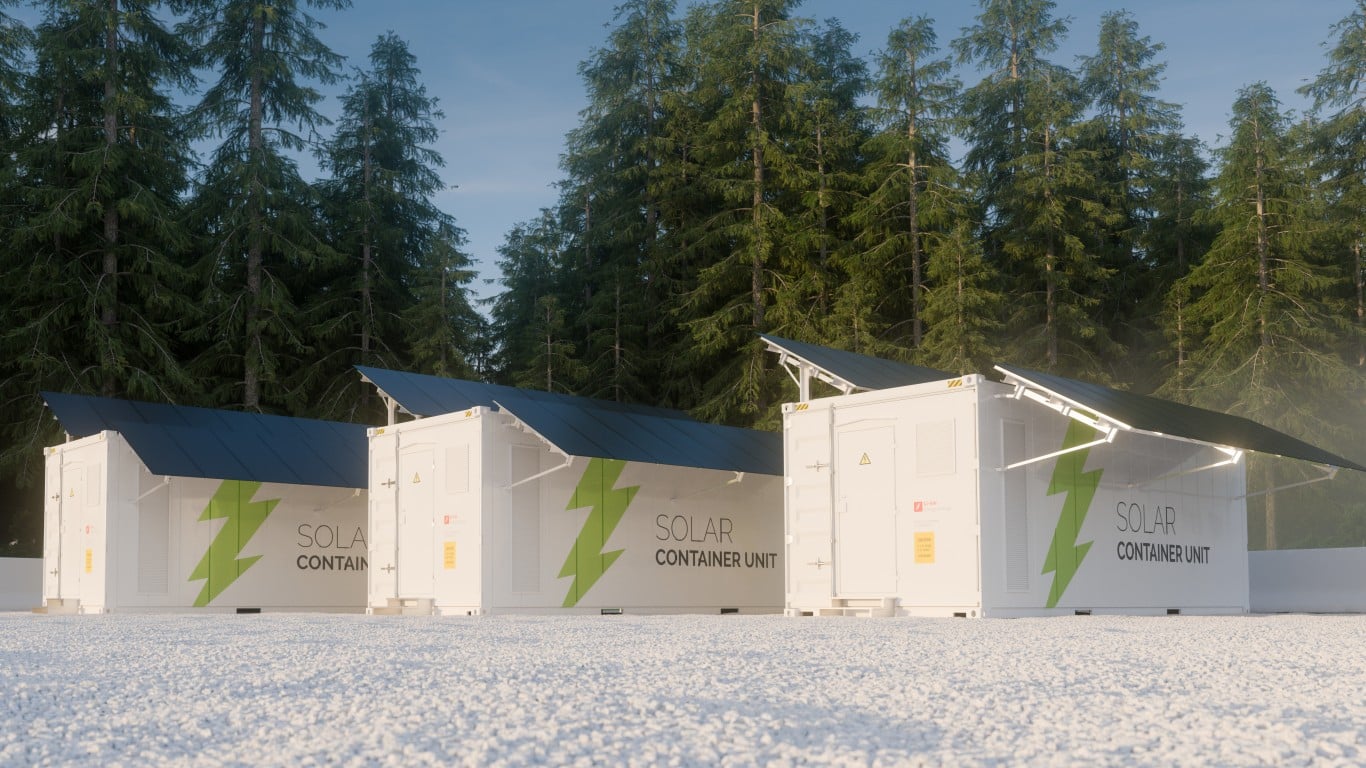
The coalition is aggregating dispatchable capacity from hundreds of thousands of home battery systems operated by Sunrun and Tesla, plus flexible peak capacity from more than 8 million smart thermostats and devices managed by Renew Home. The companies describe it as the country's largest distributed power plant, deployable in "months, not years" with no new hardware, interconnection, water, or land required from offtakers.
Act now: the analyst who called NVIDIA in 2010 just named his top 10 AI stocks — and Tesla didn't make the cut. Grab the names FREE today.
In Virginia's Data Center Alley, the partners already have more than 300 megawatts (MW) available for immediate deployment, expected to grow to at least 500 MW by 2030. Capacity for hyperscalers will be allocated on a first-come, first-served basis, and the group committed capacity to PJM's proposed Reliability Backstop Process, which they say could immediately unlock over a gigawatt.
Sunrun CEO Mary Powell framed the stakes bluntly, declaring, "The grid of the 1800s cannot power the innovation of 2026." Tesla's Colby Hastings asserted that the answer "is already in place" in the batteries, thermostats, and electric vehicles inside millions of American homes.
AI Power Demand Sets the Stage
The timing matters here. A Goldman Sachs Commodities Research study cited by the partners projects U.S. data center power demand to climb to 41 GW in 2026 and 66 GW in 2027. Sunrun is positioning itself as a fast-to-deploy answer to that load curve.
Advertisement
A Brattle Group analysis referenced in the release also estimates that better grid utilization could reduce U.S. electricity bills by $110 billion to $170 billion over the next decade. For Sunrun, that pitch reframes residential solar as utility-style infrastructure rather than a one-off hardware sale.
The macro backdrop is supportive. The Department of Energy projects data centers will account for up to 12% of U.S. electrical demand by 2028, a tailwind Sunrun and Tesla have both flagged in recent earnings commentary.
Breakthrough or Hype Cycle?
The bull case is sizable. Sunrun could tap a recurring revenue stream tied to AI-driven power demand, built on what management has called the largest residential battery fleet in the country. Sunrun's Q1 2026 results showed momentum already, with revenue of $722 million, up 43% year over year and a record 73% storage attachment rate.
The bear case is just as real, though. This is a framework or capacity-as-a-solution structure, not firm signed hyperscaler revenue contracts, and execution depends on customer enrollment, utility programs, and regulatory approvals. Sunrun stock also remains volatile and is still down 11% year-to-date.
Retail sentiment on Sunrun stock has turned visibly bullish, and some traders are floating short-squeeze speculation around the name. That chatter is worth flagging, though no firm short-interest data supports a squeeze thesis today.
What Investors Can Watch Next
Near term, investors can watch for whether Sunrun stock holds these gains into the close and whether sell-side analysts respond with revised targets. The current consensus price target on Sunrun shares sits at $19.11, with 3 Strong Buy and 9 Buy ratings against 10 Holds.
The bigger tell will be conversion. Watch for whether the Virginia capacity, the PJM Reliability Backstop allocation, and any named hyperscaler offtake agreements firm up in the months ahead. That's the line separating an infrastructure breakthrough from a transient AI hype cycle.
For now, Sunrun has reframed its story from struggling solar installer to potential distributed-grid operator. Tesla and Renew Home give the pitch genuine scale, but the contracts still have to follow. Investors comfortable with the volatility could keep position sizes measured until firm hyperscaler revenue materializes.
Act now: the analyst who called NVIDIA in 2010 just named his top 10 AI stocks — and Tesla didn't make the cut. Grab the names FREE today.
Source: “AOL Money”
