


Russia targets weapons factories in new campaign
Russia targets weapons factories in new campaign

Joe BarnesSun, August 23, 2026 at 9:43 AM UTC
0
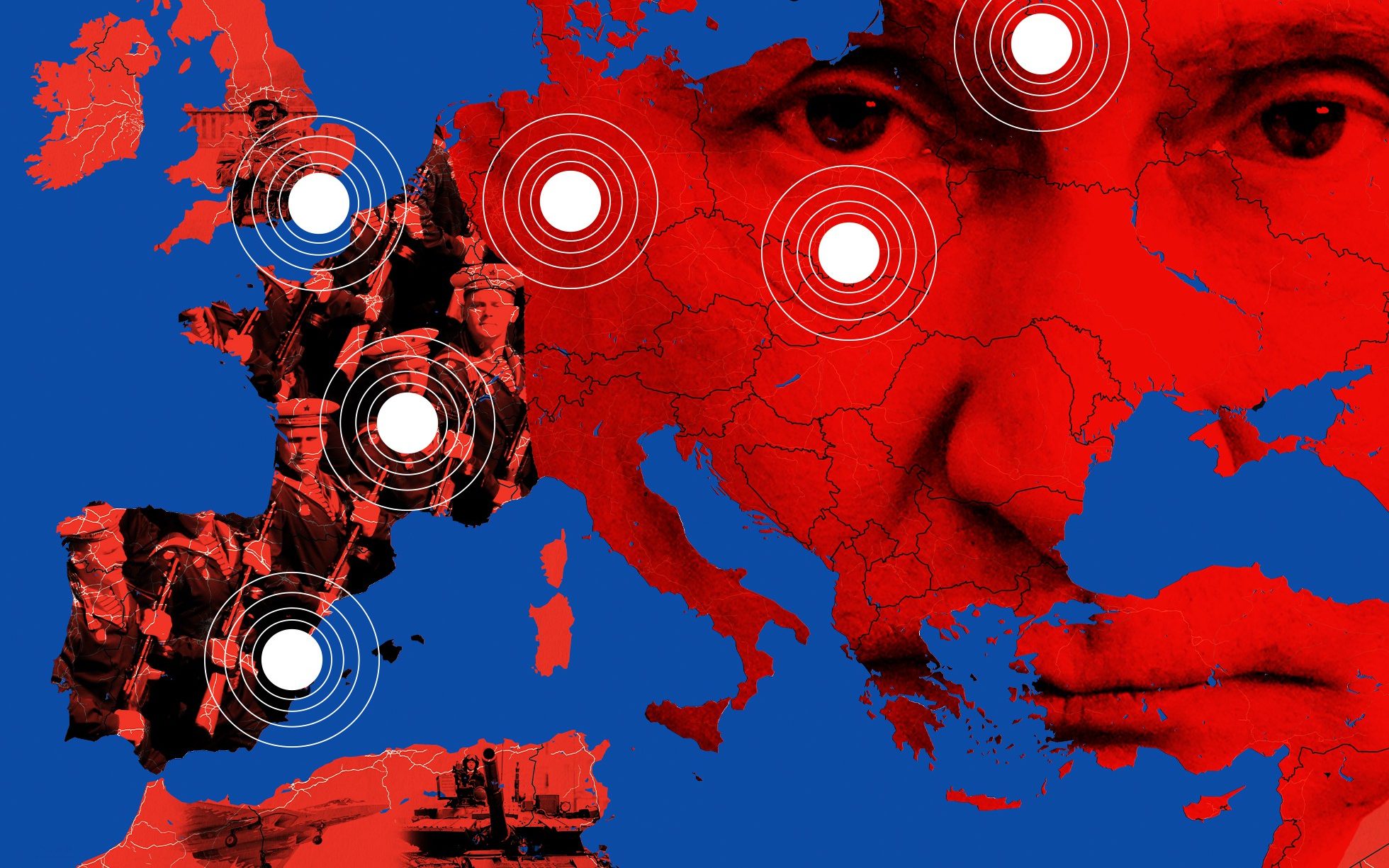
The attacks on weapons factories in the West are carefully orchestrated to fall just short of triggering Article 5
Russia has launched a fresh wave of attacks on European armaments factories under the guise of plausible deniability, according to Western intelligence sources.
The Kremlin is recruiting local gang members to sabotage defence manufacturers to test Nato’s resolve.
The attacks appear carefully calculated to fall just short of triggering Article 5, Nato’s mutual defence clause, intelligence officials believe.
This week Latvia rounded up and detained three of its own nationals on suspicion of an arson attack against a drone manufacturer in neighbouring Estonia.
A building belonging to Milrem Robotics, a Tallinn-based firm that supplies weapons to Ukraine, was set ablaze overnight on Aug 15.

Milrem Robotics, a Tallinn-based firm that supplies weapons to Ukraine, came under attack earlier this month - Peter Kollanyi/Bloomberg
The firm is one of two foreign suppliers of unmanned ground vehicles to Kyiv’s armed forces.
At the time of the incident, Kristen Michal, Estonia’s prime minister, said investigators were looking into whether it was an act of sabotage and if Russia was involved.
The Milrem arson attack fits into a broader pattern of suspected or confirmed sabotage against Ukraine’s military supply chains across Nato territory.
A Nato official added: “In recent years, Russia has accelerated its destabilisation campaigns against Allies through cyber attacks, assassination attempts and acts of sabotage.”
What has become known as the Kremlin’s “hybrid war”, other officials argue, is aimed at escalating tensions amongst Nato’s allies and deterring support for Ukraine.
Since Vladimir Putin’s full-scale invasion of Ukraine in February 2022 there has been a steady stream of unexplained attacks across Europe.
As well as the Estonian arson incident, there have been explosions at major arms manufacturers in both Italy and Bulgaria this month alone.
Earlier this year, a fire virtually destroyed a Czech plant making drones and thermal optics for Ukraine. Four suspects were detained as part of the investigation into Russian involvement.
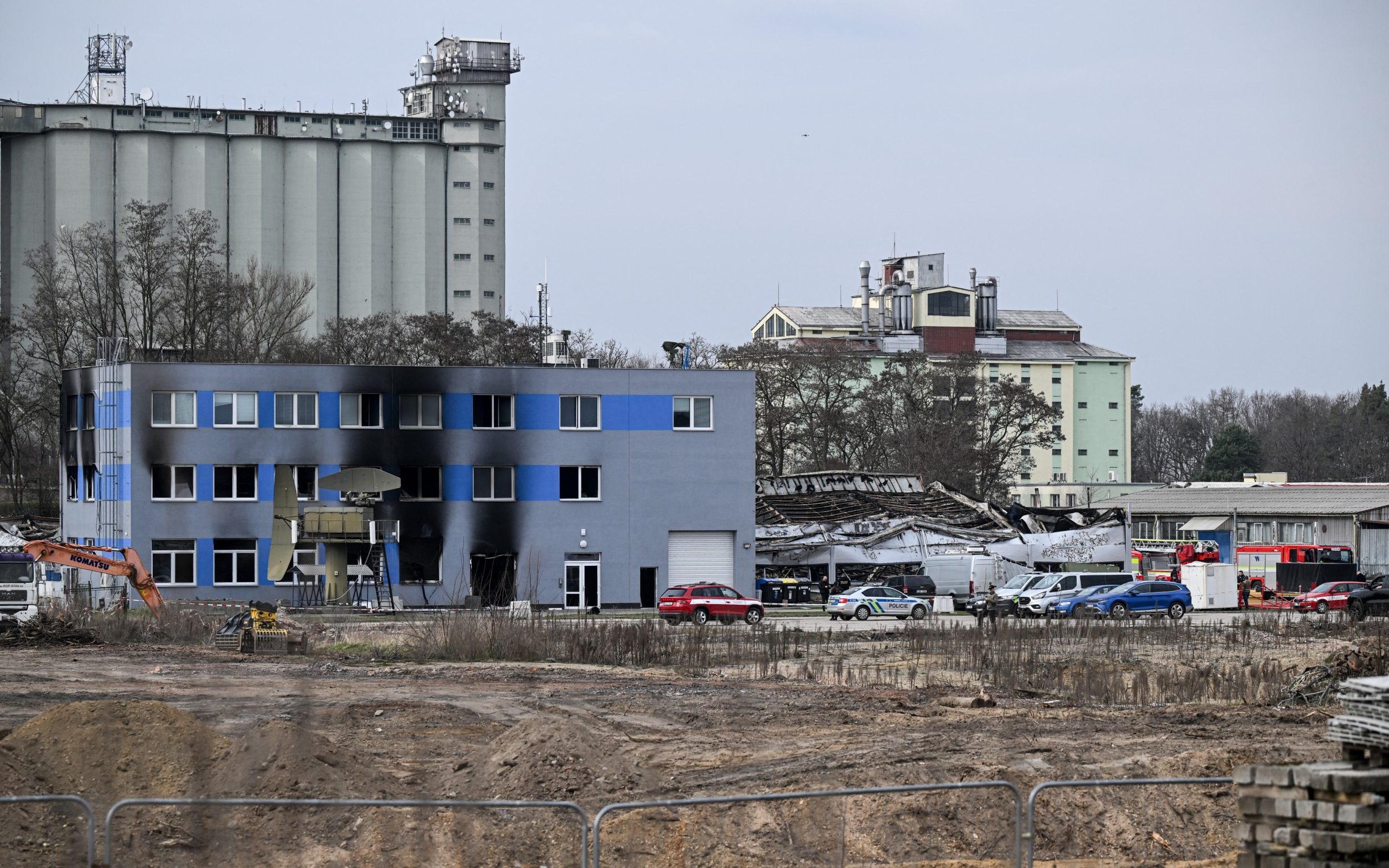
Four suspects were detained following an attack that all but destroyed a drone-making factory in Czech Republic - Michal Cizek/ AFP via Getty Images
Lithuania also charged six people over an attempt to burn down a factory supplying radio-wave scanners to Kyiv.
On Aug 10, a major explosion ripped through a plant belonging to EMCO, one of Bulgaria’s largest private arms manufacturers, which produces 155mm artillery ammunition for Ukraine.
The initial blaze was triggered by a fire in a lorry parked near a storage warehouse.
Three days later a similar blast rocked a munitions factory operated by KNDS Ammo Italy in Colleferro on the outskirts of Rome.
Credit: Italian Fire Brigade
On this occasion, the cause was said to be a so-far unexplained fire that had broken out in a gunpowder processing unit.
Italian and Bulgarian officials have both sought to play down any possible Russian involvement in the incidents.
Advertisement
But like with the cases in Estonia, Italy and Bulgaria, Russia very rarely leaves any evidence that would allow the attacks to be directly attributed to Moscow.
A Western intelligence assessment, previously reported by The Telegraph, explained how Russia’s notorious GRU military intelligence agency, known for its attacks on foreign soil using highly trained agents, had since turned to using criminal gangs.
In an interview with The Telegraph last March, Normunds Me&zcaronviets, the head of Latvia’s state security service (VDD), said: “In our experience, we don’t see officers of the GRU travelling here physically to our country.
“No, they stay in Russia where it’s safe. They’re not taking any risks for their own operational and physical security.”
Instead, GRU officers cultivate sources within criminal gangs to act as intermediaries in the targeted country using online messaging apps such as Telegram.
It is then the middlemen who dish out the local tasks to recruits, who are paid in cryptocurrency and often never find out they are working for the Russians.
Kremlin seeking to sow discord within Nato
The covert nature of the Kremlin-ordered attacks is seen as a deliberate ploy to sow discord amongst Nato allies.
Eastern member states, such as Poland or the Baltic states, have been far more vocal in calling out Russia’s aggression in Europe.
While the VDD did not explicitly blame Russia, it did confirm the three suspects from the Estonia fire had been detained under powers used to tackle criminals “providing assistance to a foreign state in action directed against another state”.
But those countries further west, such as Italy and Germany, are often not willing to attribute the incidents to Moscow over fears of an escalation.
It is this division between Western allies that the Kremlin is seeking to expose.
After the Nord Stream pipeline, which carried gas between Russia and Germany, was blown up, senior European officials proclaimed such action could lead to Nato’s Article 5 mutual defence clause being triggered.
But with the increased number of sabotage incidents, albeit smaller in scale, those same officials have become more reserved.
With each attack that goes unpunished, the Russians are gathering their own useful intelligence on just how far they can push Nato’s boundaries.
This makes every indiscretion a game of chicken between Western capitals and Moscow.
Mark Rutte, Nato’s secretary-general, frequently warns Russia that its suspected sabotage attacks are “reckless and dangerous”, arguing for the alliance’s response to be “clear, swift and decisive”.
A Nato official said: “Nato continues to boost its resilience and is applying and enhancing the tools at our disposal to counter hybrid actions. We continue to monitor malign activities conducted against Allies, including through proxies. At every stage, we will ensure that the Alliance is prepared to deter and defend against any threat and to keep our one billion citizens safe.”
In a bygone era, European diplomats and military officers would be able to use backchannels with Moscow to manage escalation in the knowledge neither side wanted to go to war with one another.
But many of those covert communications links have dried up in the years following Russia’s invasion of Ukraine.
With Putin preparing Russia to use force against Nato “within five years”, according to Mr Rutte, Western officials see this hybrid attack as a potential precursor.
What was once confined to the eastern borders with Russia is moving west and becoming a new norm in the battle between the alliance and Moscow.
Source: “AOL Breaking”
