


Man City’s future is bleak if UAE owners forced out
Man City’s future is bleak if UAE owners forced out

Sam WallaceSun, October 4, 2026 at 6:29 AM UTC
0
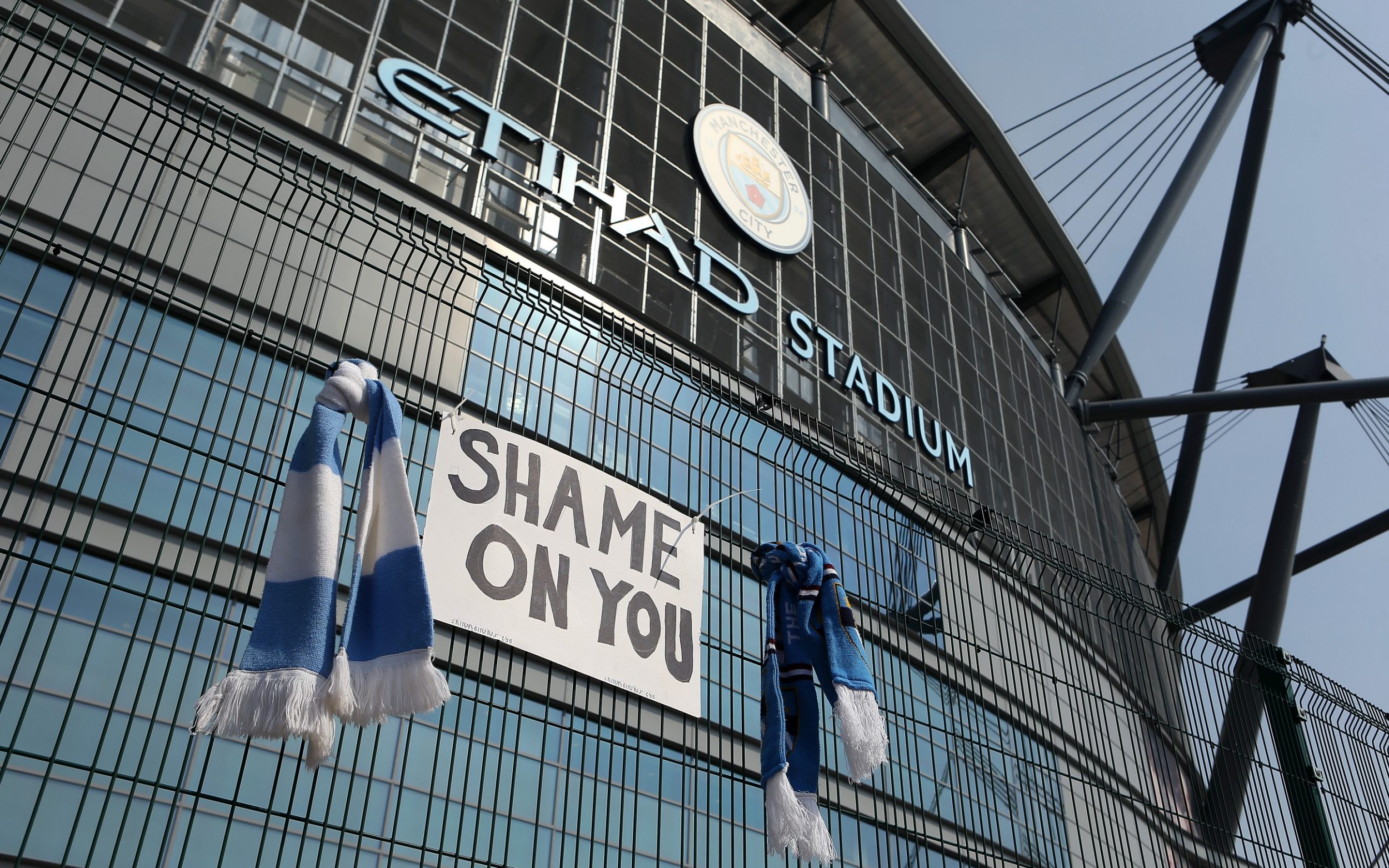
Manchester City have been plunged into crisis by the crushing guilty verdict on charges of breaking the Premier League’s financial rules - Getty Images/Charlotte Tattersall
Soft power is how it was defined: the influence one might gain from backing a humanitarian appeal, sponsoring a museum wing, or buying a leading football club down on its luck. It certainly does not feel so soft now, almost two decades since the United Arab Emirates took a look at Manchester and sensed an opportunity.
The meeting between Khaldoon Al Mubarak, the UAE’s de facto prime minister and Manchester City chairman, and John Reynolds, the Business Secretary, last month, flagged the direction in which British sport’s biggest ever legal case is heading. One wonders why the man who is Sheikh Mansour bin Zayed Al Nahyan’s representative on earth – or at least in Manchester – was not given an audience with a minister higher up the food chain given the UAE’s political heft. If Al Mubarak thought so, one assumes his reputation for disarming politeness prevented him from saying so.
What was discussed in that meeting? Even No 10 has conceded that the Premier League’s case against City, and the crushing guilty verdict that was published this week, has not exactly been advantageous for Britain attracting investment from Abu Dhabi. For a country in desperate need of growth and a government seeking to build momentum, this was – at the very least – a meeting that the minister in question will have taken seriously.
It would not be a giant leap of faith to say that at the top of Al Mubarak’s priorities will be the reputation of Sheikh Mansour, the brother of his ultimate boss, the president of the UAE. The tarnishing of a central figure in the dynastic ruling family is an emergency for the Abu Dhabi ruling class. If all foreign policy is ultimately domestic then even a role adjacent to a £900m book-cooking exercise is a dangerous association for a family that ultimately rules its own emirate by a mix of force and reputation.

Manchester City’s hierarchy – including owner Sheikh Mansour bin Zayed Al Nahyan (left) and chairman Khaldoon Al Mubarak (centre) – could be facing bans under the terms of the owners, directors and senior executives - Getty Images/Craig Mercer
This seems to be at the heart of the grave steps that lie ahead, should City’s legal counsel be unable to overturn all or any of the commission’s verdict on appeal. If Sheikh Mansour finds himself embroiled in this scandal, what price the future of the UAE in Britain? And with it the future of the club that has been the flagship public relations exercise for Abu Dhabi, via its royal proprietor.
Leave aside the prospect of the points deduction, the fine, or the compensation claims, onerous though they may well be. What is really at stake is the future of City. The entity that, more than any, holds City’s fate in its hands is the Independent Football Regulator (IFR), the public body finally ushered into life this year by Act of Parliament, birthed on a tide of indignation about the failed European Super League, club ownership in general, and in no small way, the fate of Bury FC.
Advertisement
Yet if the IFR and David Kogan, its chairman, exercise the full breadth of his powers then the future is bleak for City. It would be obliged to ban Mansour under the terms of the owners, directors and senior executives ODSE regime, the nightmare scenario for Al Mubarak and the rest of the ruling family’s inner circle in Abu Dhabi’s Executive Affairs Authority. The exit of Abu Dhabi from City would prompt the departure of all those commercial partners, many of whom have already played a central role in the drama. From there it just gets worse.
The spectres of compensation costs, the price of relegation – all of this makes City a lot less attractive to a new owner than the Chelsea of 2022, sold out from underneath a sanctioned Roman Abramovich. Chelsea had some tricky history too, and there would be a small price to pay. The club had its stadium problem and also a newly attained place among the elite that was by its nature more fragile. But there was nothing like the burden City might well end up shouldering. As with any of the big six, its transfer debt and contract liabilities will be vast. City’s wage bill extends well beyond its men’s first-team squad.

Roman Abramovich, the former Chelsea owner, was forced to sell the club after being sanctioned by the UK government in 2022 - AP/Matt Dunham
It will be a long way back, and a very certain kind of owner who might be prepared to take on post-Abu Dhabi City – not to mention potentially the 11 other clubs under the ownership of City Football Group.
If the verdict holds, there will be no doubt where the guilt lies. Many will say that the ignominy of sanction under the regulator’s owners, directors and senior executives regime is the very least that the Abu Dhabi prince and his advisers deserve. Yet blitzing City out of existence feels once again like the game has grasped the wrong end of this. It is remarkable we have ended up here. It took professional football about 150 years to establish a legal means by which to protect its clubs and within the first 12 months the regulator may face the prospect of taking action that forces one of the oldest clubs over the precipice.
The political choices now being weighed up over relations with the UAE, and the way this case plays out are unforgiving. Andy Burnham, the Prime Minister, will naturally have considered football his safe space – a part of British public life for which he has an instinct. Yet the game’s vicissitudes can be brutal. Mixed with the politics of the global, multi-billion-dollar kind that come with Abu Dhabi and its attendant investments in Manchester, the game has created one of Burnham’s government’s first crises.
Football’s power, for politicians and for royals of Gulf states, is that it cuts through so easily. Almost everyone gets it. Although not much was ever disclosed about Sheikh Mansour, the glow of success had value for UAE. The ultimate soft power investment? The reverse is that there is now no hiding place. This is not a bloodless bilateral treaty announcement with the detail obscured to all but the experts. People who like football, of which there are many, have an idea what the City verdict means for their club and for their grievances. The soft power is ebbing and in its place a hard collision of sorts between two nations. At its centre is a football club wondering what the future looks like.
Try full access to The Telegraph free today. Unlock their award-winning website and essential news app, plus useful tools and expert guides for your money, health and holidays.
Source: “AOL Money”
