


Data centre farce exposes flaws in Britain’s AI boom
Data centre farce exposes flaws in Britain’s AI boom

Ben MarlowTue, October 20, 2026 at 5:00 AM UTC
0

Microsoft’s pledge to invest $22bn (£17bn) in Britain was the headline-grabber of Donald Trump’s 2025 state visit - WPA Pool/Getty Images/Yui Mok
The fanfare that accompanied Donald Trump’s three-day visit to these shores last year was predictably over the top.
Trump’s arrival was greeted by the largest guard of honour ever at a state visit, and UK and US F-35 fighter jets conducted a first-ever joint flypast and the president joined the King for a carriage procession.
Trump, meanwhile, described the King as a “friend” – though tellingly His Majesty didn’t return the compliment.
But the real headline-grabber was Microsoft’s pledge to invest $22bn (£17bn) in Britain – a country that Brad Smith, the company’s president, had laughably claimed was “closed for business” after the UK competition regulator had the temerity to object to Microsoft’s proposed £70bn mega-merger with gaming giant Activision.
Never mind that the software behemoth already controlled 70pc of the gaming market. Apparently, this entirely sensible ruling discouraged technology innovation and investment on these shores.
Just one year later, the promise Microsoft made as part of Trump’s visit lies in tatters, and possibly so too the UK’s artificial intelligence dreams.
At the heart of Microsoft’s commitment was its backing for a flagship data centre project earmarked for a corner of Essex. The plans are being spearheaded by British start-up Nscale, but Microsoft has already pulled out of the deal, after it soon became clear the supercomputer wouldn’t be connected to the power grid until the 2030s. Yes, you read that right.
To say this is a blow would be an understatement. So much was riding on the £2bn project that you would be forgiven for thinking the Government’s AI ambitions live or die on a computing hub being built on the outskirts of Epping Forest.
In many ways they do. First there’s the data farm itself. It is no exaggeration to say the project was a centrepiece of the Labour Government’s AI strategy.
The largest ever to be built in this country, Sir Keir Starmer – remember him? – claimed that Microsoft’s involvement was a step towards Britain “becoming a world leader in AI”.
Ministers were so desperate to make it operational that they took the highly unusual step of pressuring the council to approve the project when Nscale, buoyed by Microsoft’s investment, returned with plans to make the facility 50pc larger in capacity and height. Instead, it may now be dead before it has even progressed beyond the conception stage.
Then there’s Nscale, which has positioned itself as Britain’s “sovereign” data centre provider. The Loughton site was to be the first it had constructed here, and Microsoft had agreed to become the anchor tenant; indeed, it was Nscale’s only announced UK customer.
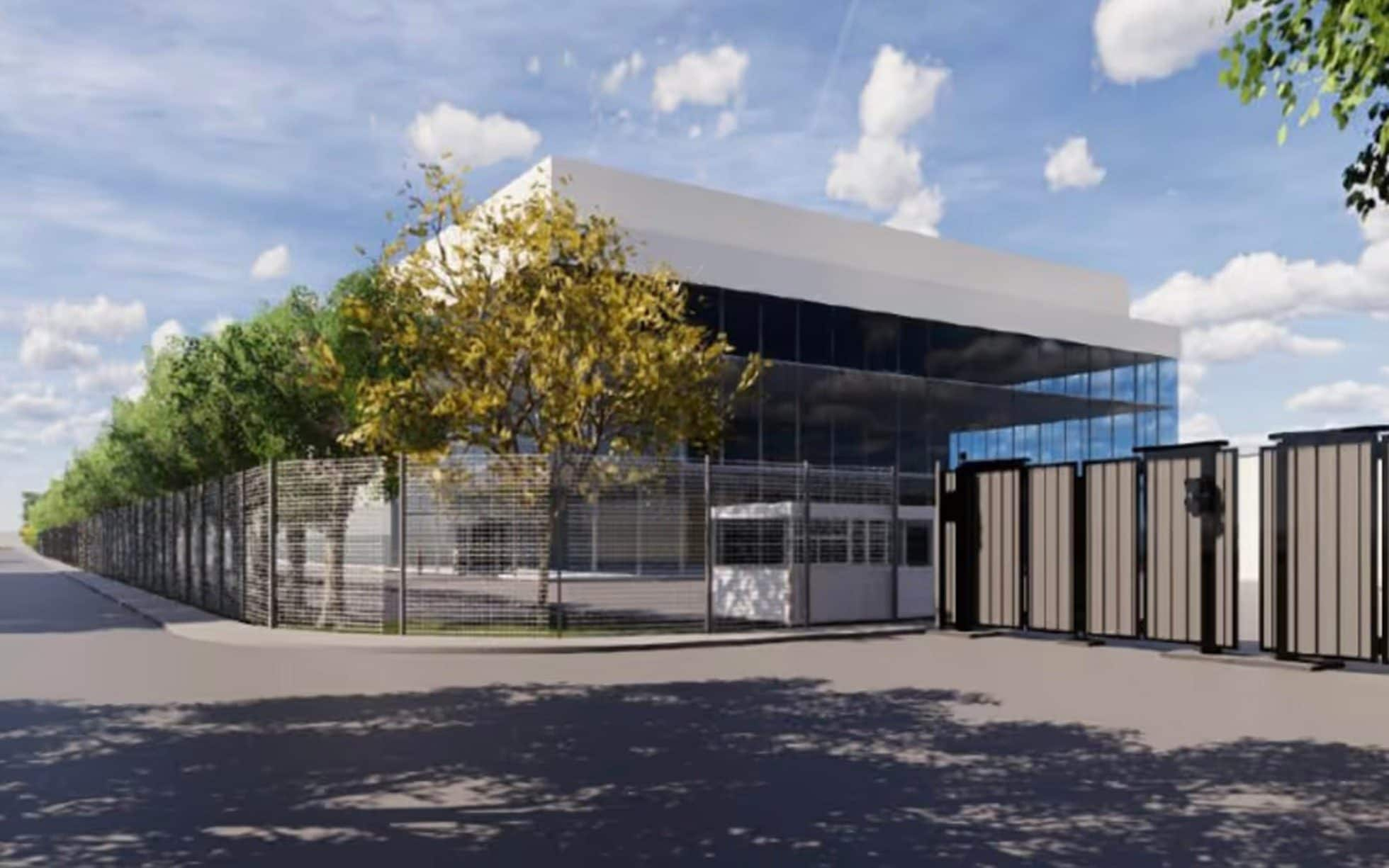
The Loughton site was to be the first data centre built by Nscale, which has positioned itself as Britain’s ‘sovereign’ provider
Yet despite this obvious weakness in Nscale’s business model, the hype surrounding the company has been quite something to behold.
Indeed, only last week, Jensen Huang, the chief executive of Nvidia and AI overlord, said Nscale could be the most valuable UK start-up created in the last 10 years.
One assumes much of Huang’s assessment is based on Nscale’s plans for a Wall Street stock market listing expected to value the company at $35bn.
It’s a price tag that already sounded highly ambitious given 85pc of Nscale’s $100bn backlog of contracts came from just two clients: Microsoft and Anthropic. But against a brutal sell-off in AI computing stocks, and now the unravelling of the Microsoft funding for the Loughton site, one has to wonder how long it will take the float price to be adjusted.
Advertisement
Shares in Aker, the Norwegian industrial giant that is Nscale’s largest investor, fell by more than 7pc after Microsoft pulled out of the data centre deal.
Never mind that despite billing itself as “Europe’s hyperscaler engineered for AI”, and somehow quickly becoming Silicon Valley’s partner of choice in the UK, Nscale has yet to build a data centre itself.
Huang says it “could be a national champion for AI infrastructure” but then he can hardly be considered an objective observer. Not only has Nvidia ploughed $500m into Nscale, but guess where the 23,000 AI chips Microsoft had agreed to rent were coming from? Yep, you guessed it: Nvidia.
It is this incestuous “circularity”, to use financing parlance – in which AI giants are essentially financing their own customers – that has left investors questioning whether the AI boom and the extraordinary stock valuations underpinning it are built on sand.
Meanwhile, 10 years ago, Josh Payne, Nscale’s Australian founder, was working as a “dogman” – Aussie lingo for a crane rigger – on a Sydney building site, dabbling in Bitcoin during his spare time. As for Nscale’s data centre construction credentials, they amount to retrofitting ones that it has acquired. Yet apparently everyone is fine with that.
This whole escapade was supposed to signal to the world that Britain could become a serious player in the most significant technological development of our lifetime.
Instead, and with an overwhelming sense of inevitability, it’s done the opposite, turning into a farce that has once again exposed all the flaws and weaknesses that repeatedly hold back the economy.
Whether it’s High Speed 2, Hinkley Point C or a third runway at Heathrow, a country whose Victorian forefathers were once the world’s most admired engineers has developed an astonishing inability to build the critical infrastructure a supposedly advanced economy needs.
Nscale’s setback is further evidence of the extent to which energy, and the availability of power have become the primary bottleneck facing the AI bonanza.
With a need for massive, localised, continuous power, as much as 30pc of the entire local electricity grid is already being taken up by data centres in some parts of the world.
It explains why some of the tech giants have begun financing the upgrade of nuclear power plants, and the development of mini-nuclear reactors.
But it is also another reminder of the embarrassing state of the UK’s grid infrastructure, which is so horribly outdated it is clearly no longer fit for purpose.
In fact, there’s a reasonable case to be made that the grid is fast becoming the single biggest obstacle to economic growth, especially in the South East, where Nscale had wanted to build.
The power network suffers from a multitude of problems. Much of our power generation is done in the North Sea, in Scotland and the Midlands, where most of the gas-fired power plants are located. Yet transmission is poor and regional and local distribution capabilities are insufficient for the 21st century.
Layer on a poorly managed grid that operates on an absurd “first-come, first-served” basis, and has allowed thousands of speculative, unbuilt solar and battery storage projects to clog up the queue, and you have a recipe for total disaster.
The Government can have all the AI ambitions it wants, but if the tech giants leading the boom face decade-long delays for connections they will assume we’re not a serious country and take their business elsewhere. It’s really that simple.
Source: “AOL Money”
